No products in the cart.
0% Oxygen 100% Flavour: How Ginger Anaerobic Process Transforms Coffee
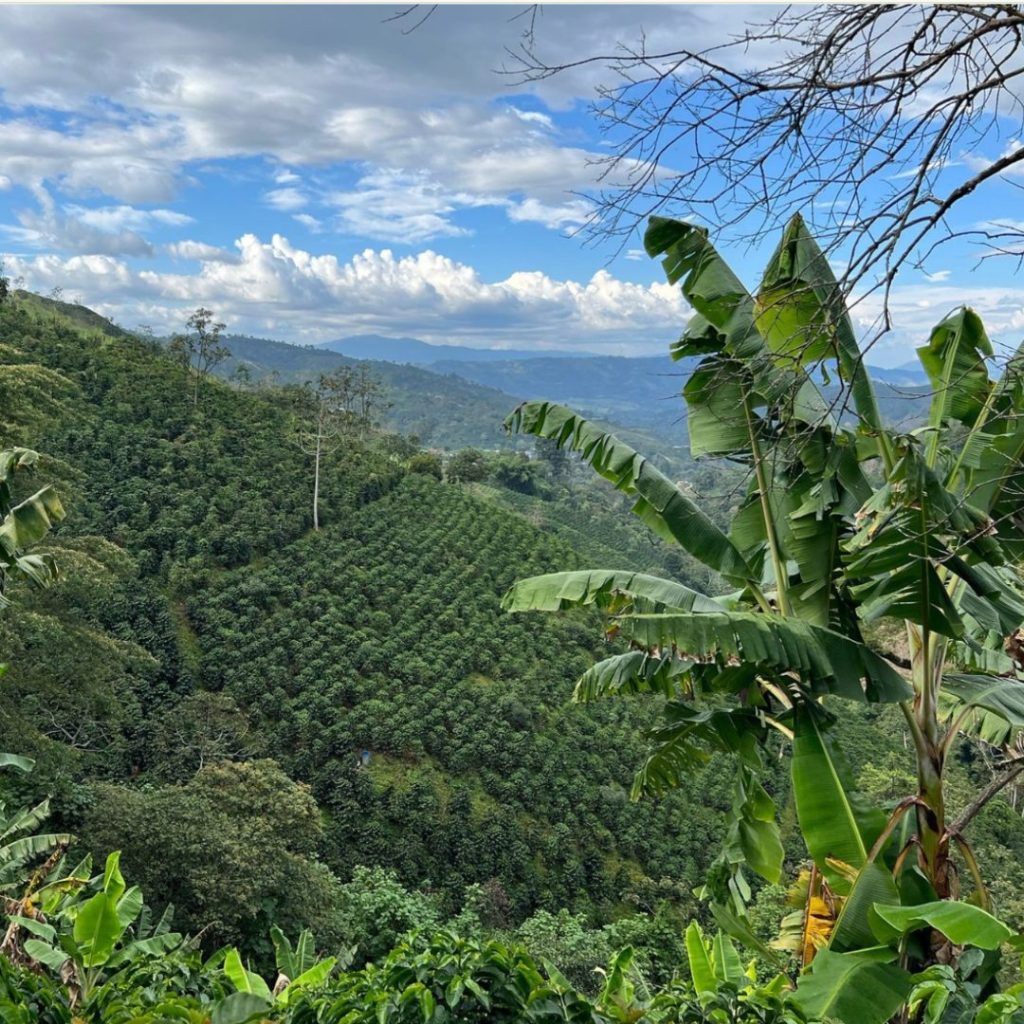
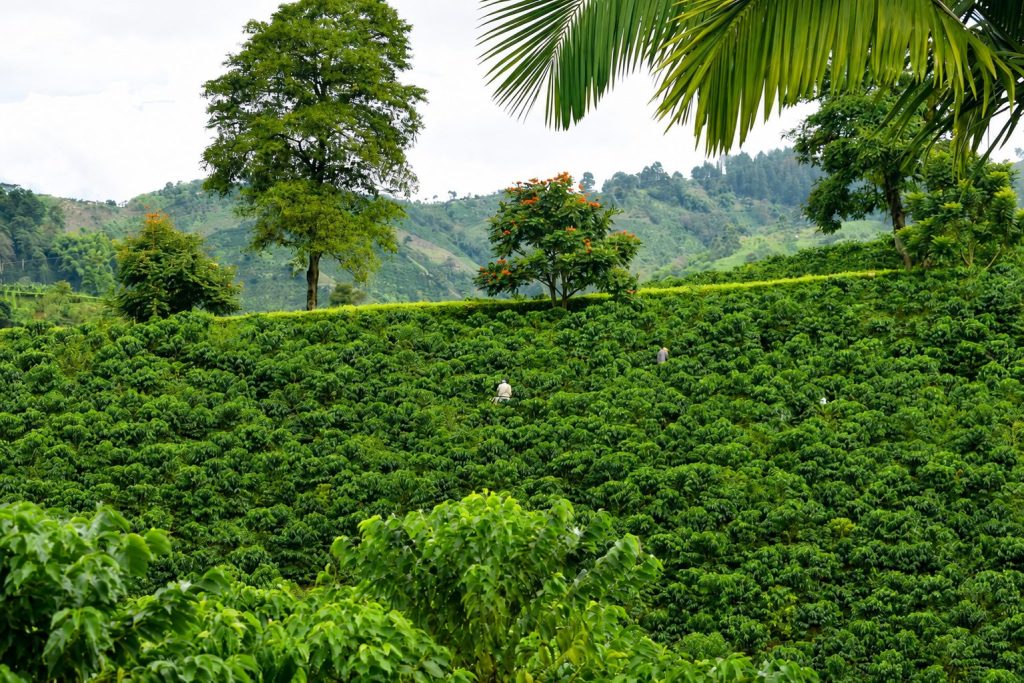
Coffee has been cultivated in Colombia for more than two centuries, and today the country remains one of the world’s largest producers of Arabica coffee. High mountain ranges, volcanic soils and favourable climates provide ideal growing conditions across many departments. Elevations frequently exceed 1,500 metres above sea level, allowing cherries to mature slowly and develop higher sugar concentrations.
Colombia has built its reputation on exceptionally clean, balanced coffees, often produced using the traditional washed method. However, a growing number of farmers are now exploring controlled fermentation and other experimental techniques.
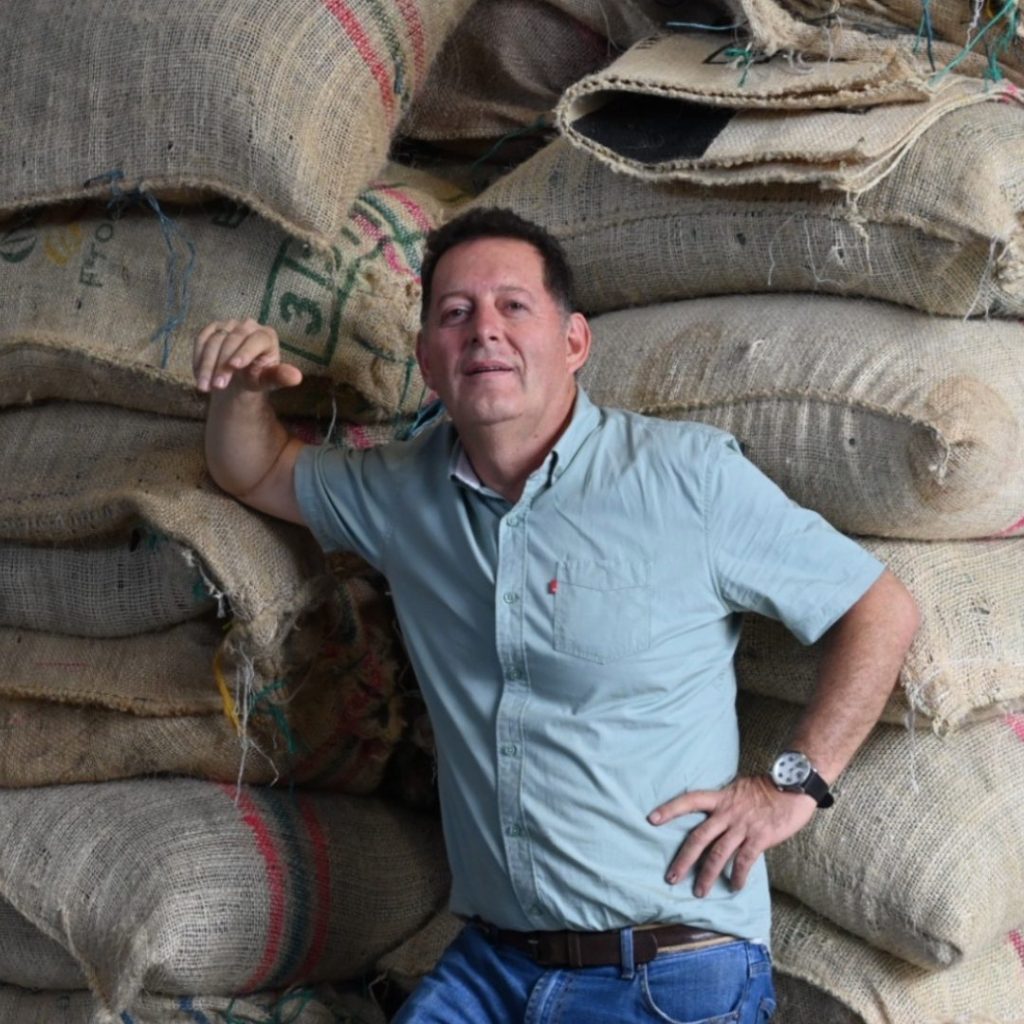
These approaches do not replace the qualities created by altitude, variety and climate. Instead, they give producers another way to shape the final cup. This particular lot comes from El Renacer, Elmer Restrepo’s farm in Chinchiná, Caldas. Drawing on nearly four decades of experience, Elmer has developed a strong focus on quality and precise processing. Here, a carefully managed fermentation process creates a profile that feels distinctly different from the classic Colombian style.
The Science Behind the Ginger Anaerobic Process
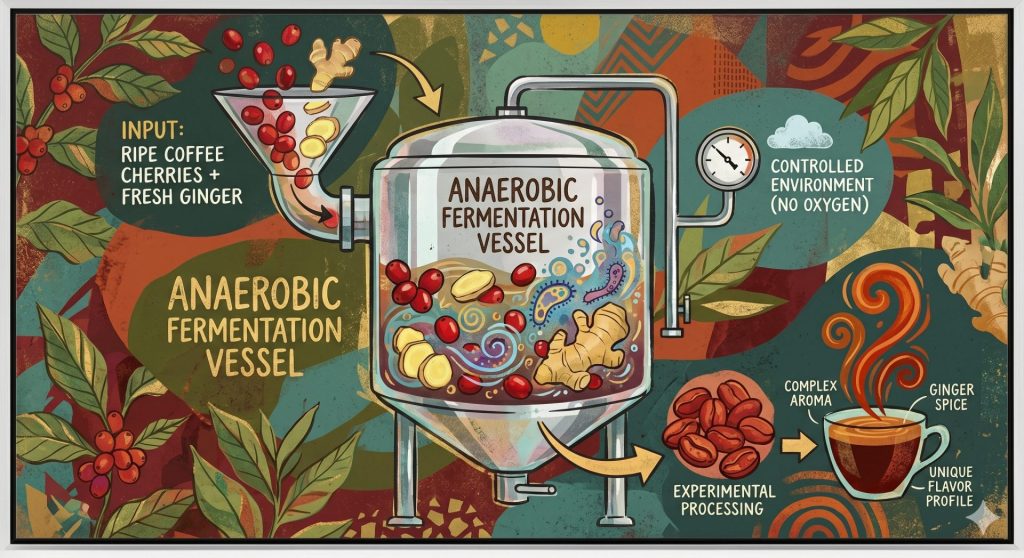
Anaerobic fermentation simply means fermenting coffee in an environment with little or no oxygen. Instead of allowing the beans to naturally develop in open tanks, producers create sealed conditions where they can better manage microbial activity and flavour development.
For our Ginger Anaerobic, the process begins with a specially prepared mother culture, made using Lactobacillus and Saccharomyces cerevisiae. These selected microorganisms are combined with natural sweeteners and farm-grown ginger to create a fermentation medium that will influence how sugars within the coffee cherries break down over time.
Cherry selection comes next. Only high-quality fruit is floated to remove underripe, damaged or defective cherries before pulping removes the outer skin. Following pulping, the coffee is transferred into a sealed 200-litre fermentation tank containing approximately 80 litres of the ginger culture. Inside this closed environment, fermentation continues for exactly 72 hours.
During those three days, microorganisms consume sugars and produce organic compounds that gradually reshape the coffee’s chemistry and therefore flavour. Small adjustments at this stage later become noticeable aromas, sweetness and texture after roasting.
Every Step After Fermentation Matters
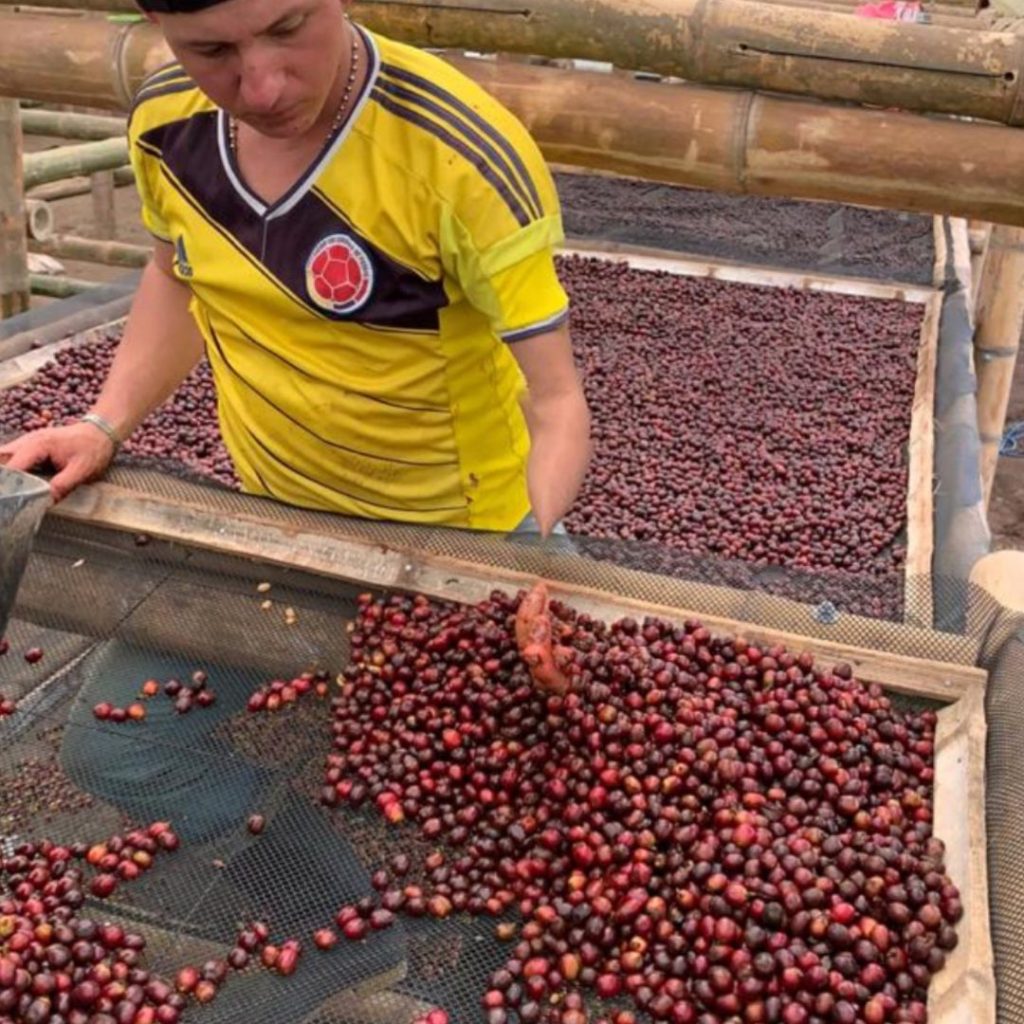
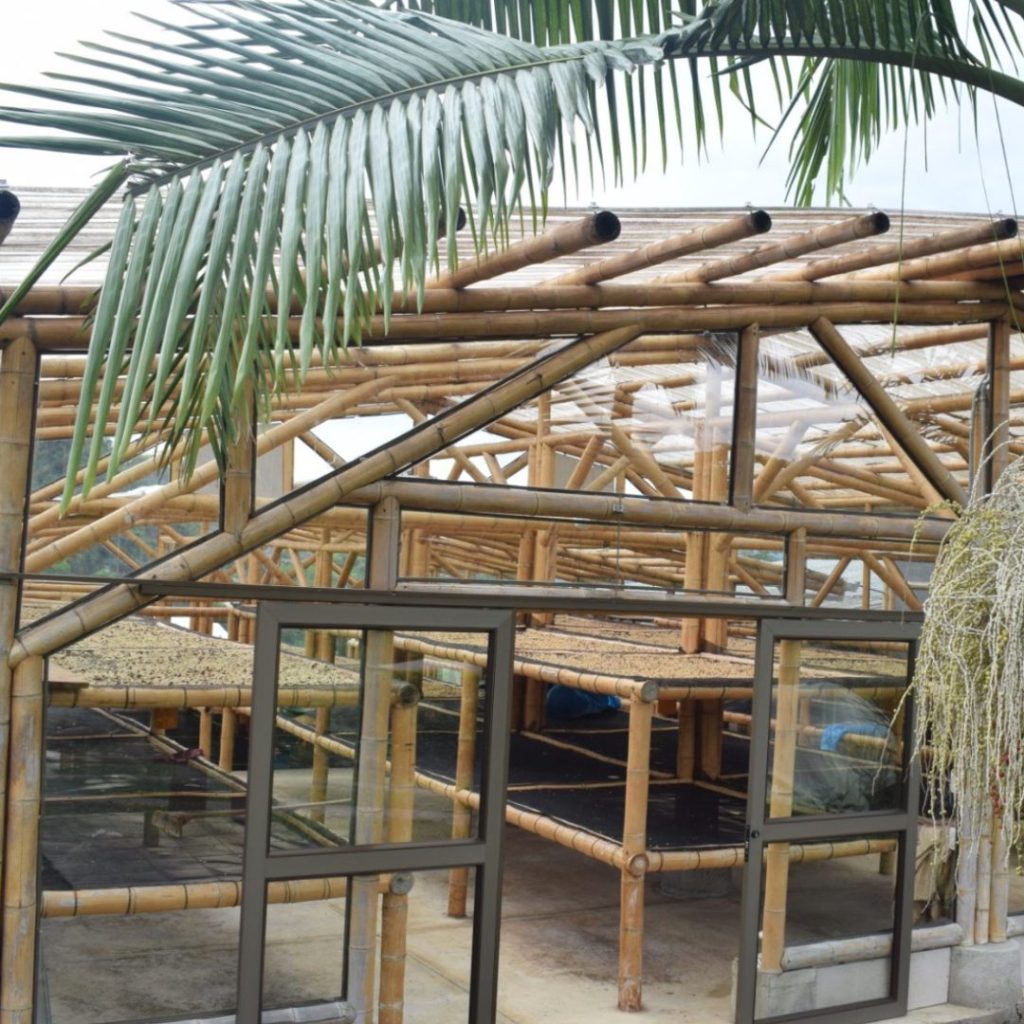
Completing fermentation is only half the process. Drying determines whether those newly developed flavours remain stable. Immediately after the 72-hour fermentation finishes, the coffee is placed in direct sunlight for between two and three days. This initial stage rapidly slows microbial activity while beginning moisture removal.
Once that first phase is complete, the coffee moves beneath shaded drying canopies for approximately eight additional days. Drying more slowly allows moisture to leave the beans gradually. The beans are monitored until moisture reaches around 10 to 11 per cent. Maintaining this range helps protect quality during export while preserving the sweetness and clarity developed throughout processing.
How to brew our Ginger Anaerobic from Colombia
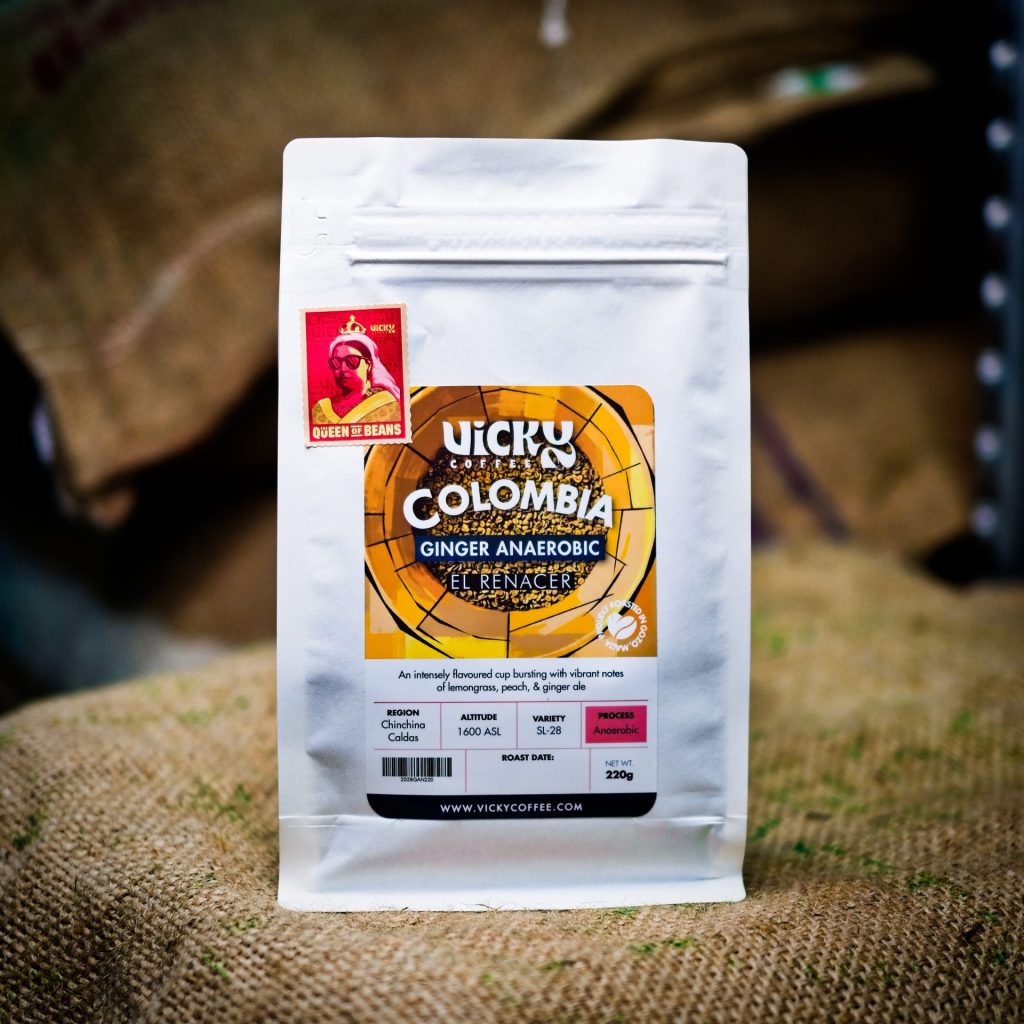
Our roasters recommend brewing this coffee as a filter or pour-over. Methods such as the V60 or Chemex highlight its intense flavour and vibrant notes of lemongrass, peach and ginger ale perfectly.
Whichever brewing method you choose, allowing the coffee to cool slightly can reveal additional sweetness and greater aromatic detail, making each stage of the cup taste a little different from the last.
Explore our Colombian Ginger Anaerobic as a one-time purchase or through one of our subscription packages, delivered straight to your doorstep monthly or every two weeks.