

No products in the cart.
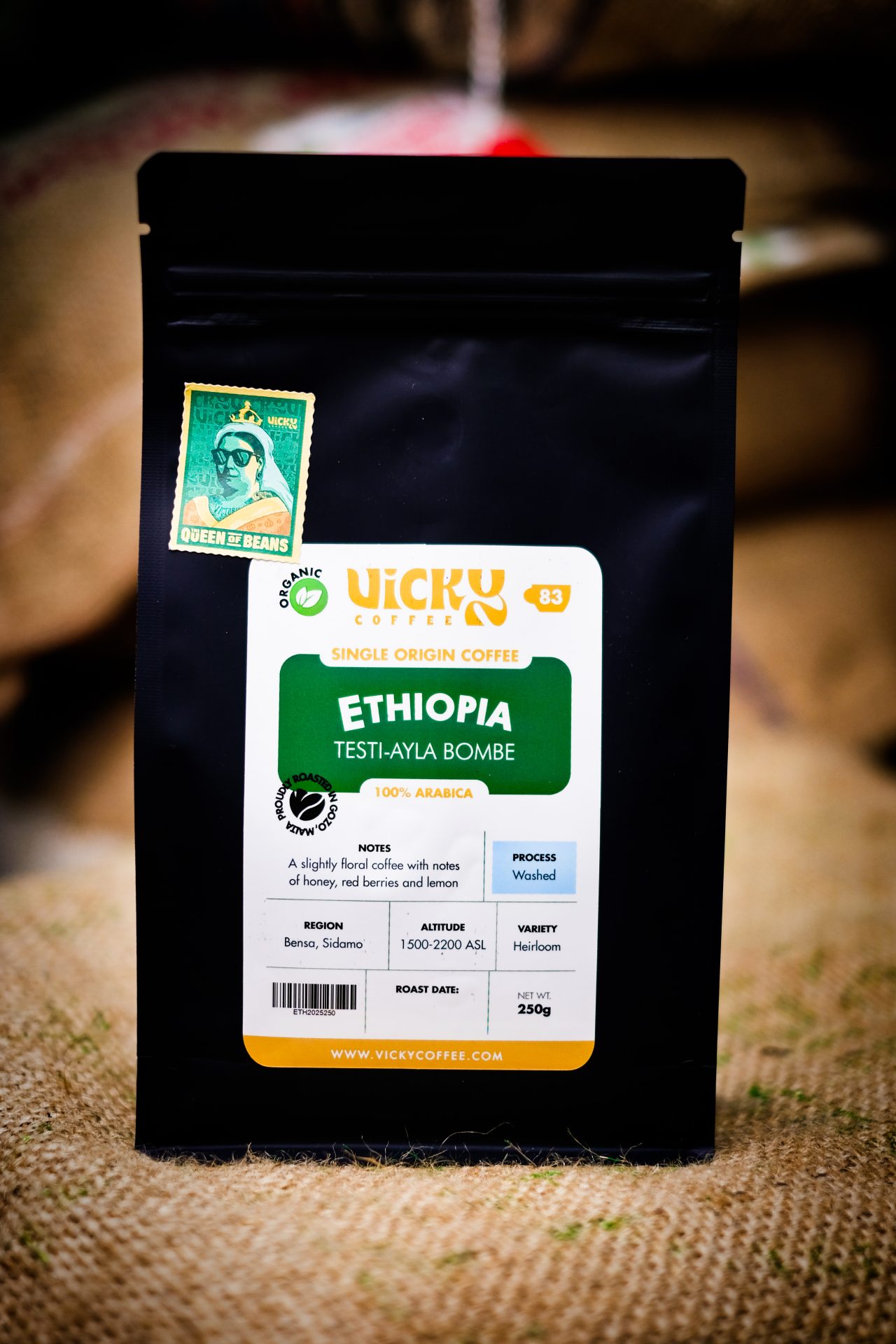
Testi-Ayla Bombe, Ethiopia
€14.00 – €44.80 — or subscribe and save up to 15%
Variety: Heirloom
Process: Washed
Producer: Testi-Ayla Bombe Washing Station
Region: Bensa, Sidamo
Altitude: 1,500 – 2,200 metres
Certification: Organic
Notes: A slightly floral coffee with notes of honey, red berries and lemon
Recommended For: Filter
Description
A Journey to Bombe, Ethiopia
We are proud to introduce a coffee that is not just delicious, but also steeped in a rich history and a profound commitment to quality. This exceptional lot comes from the Bombe village in Ethiopia’s Sidama zone, a region renowned for producing some of the world’s most exquisite coffees. Here, at an altitude of 1,950 meters above sea level, sits a privately-owned washing station named Ayla, a tribute to the niece of its founder, Mr. Faysel A. Yonis. This isn’t just any station; it is one of 28 managed by Testi Coffee, a family-owned company dedicated to honouring the art of coffee production.
What makes this coffee truly special is the care and collaboration that goes into every single cherry. The Ayla washing station receives fresh, hand-picked coffee cherries daily from around 725 independent growers. These aren’t large-scale farms, but small plots of land, averaging under two hectares, where families grow their coffee organically, alongside food crops like corn and bananas. This traditional method of farming, under the shade of native Birbira, Wanza, and Acacia trees, not only protects the environment but also contributes to the unique character of the beans.